Showing posts with label LifeStyle. Show all posts

Tann Ki Baat: Yoga beyond religion, says PM Modi as he leads nation on 5th International Yoga Day

Tann Ki Baat: Yoga beyond religion, says PM Modi as he leads nation on 5th International Yoga Day
modi yoga
PM Modi performing Yoga in Ranchi. (Image: PIB India)

HIGHLIGHTS

  • It is the 5th International Day of Yoga
  • PM Modi led Yoga Day celebrations in Ranchi on Friday
  • He said yoga is beyond religion and caste
Prime Minister Narendra Modi led Yoga Day celebrations and performed asanas at a ground in Ranchi on Friday along with 40,000 others while other BJP leaders, Union ministers and yoga enthusiasts did the same in other cities across the country.
Before starting with the asanas, PM Modi addressed the nation on the 5th International Day of Yoga and said that yoga is above all and unites people irrespective of religion, caste, creed and society.
Union ministers Amit Shah, Rajnath Singh, Smriti Irani and others also held different Yoga Day events in Delhi and other cities at the same time as PM Modi was performing in Ranchi.


Jharkhand: Prime Minister Narendra Modi performs yoga at Prabhat Tara ground in Ranchi on

56 people are talking about this

PM Modi also said the government has been working to make yoga a pillar of preventive healthcare.
Expressing concern that young people are becoming vulnerable to heart ailments, Modi said, "Yoga can play a huge role in tackling the issue and hence, this year's theme is 'Yoga for Heart'."
PM Modi then appealed to the people to take yoga to all sections of society.
"We should make efforts to take yoga from cities to villages, tribal areas. Yoga is above region, above faith, above everything," Modi told the gathering.
He also stressed that for yoga to become popular, infrastructure for it must be strengthened and said the government was working towards it.
Urging people to make yoga a part of daily life, Modi said, "Peace and harmony are related to yoga. People across the world must practice it."
The prime minister had arrived in Ranchi on Thursday night to participate in the main event on the International Yoga Day.
Since 2015, the International Day of Yoga is celebrated annually on June 21.

Cold wave intensifies in Kashmir, Srinagar records minus 6.4 degrees Celsius

Cold wave intensifies in Kashmir, Srinagar records minus 6.4 degrees Celsius

The cold wave in the Kashmir valley and the Ladakh region intensified on Monday as the minimum temperatures dropped below the freezing point.

The MeT department said fresh Western Disturbance is likely to affect the higher areas of Jammu region on January 15. (Photo: Rouf Ahmad)

HIGHLIGHTS

  • Famous ski-resort of Gulmarg recorded minus 12 degrees Celsius
  • Jammu recorded a minimum temperature of 3.9 degrees Celsius
  • Leh recorded a minimum temperature of minus 16.2 degrees Celsius
The cold wave in the Kashmir valley and the Ladakh region intensified on Monday as the minimum temperatures dropped below the freezing point.
Srinagar, the summer capital of the state, recorded a minimum temperature of minus 6.4 degrees Celsius, six notches below previous night -- 0.4 degree celsius, the MeT said.
Famous ski-resort of Gulmarg in north Kashmir remained the coldest place of the state where mercury settled at minus 12 degrees Celsius.
The famous health resort of Pahalgam in southern Kashmir recorded a minimum temperature of 14.6 degrees Celsius.
Photo: Rouf Ahmad
Kupwara, the frontier district of North Kashmir, recorded a minimum temperature of minus 5.4 degrees Celsius. Qazigund town in South Kashmir, the gateway point to the Kashmir valley, recorded a minimum temperature of minus 5.9 degrees Celsius.
Jammu, the winter capital of the state, recorded a minimum temperature of 3.9 degrees Celsius and Udhampur recorded 1.8 degrees Celsius.
The Ladakh region witnessed further drop in mercury. Leh recorded a minimum temperature of minus 16.2 degrees Celsius. Kargil recorded minus 18.8 degrees Celsius.
The 434-km long Srinagar-Leh highway and 86-km long Mughal road, which connects South Kashmir's districts with Poonch and Rajouri district's of the Jammu region, remained closed due to accumulation of snow on surface at several places.
Photo: Rouf Ahmad
The MeT department said fresh Western Disturbance is likely to affect the higher areas of Jammu region on January 15.
Light showers are likely on January 15 at isolated pockets of Jammu. However, Kashmir and Ladakh region will remain dry and there will be further drop in temperatures in the reigion.

How young Narendra Modi got his guiding force: Freezing Himalayan baths, life with sadhus

How young Narendra Modi got his guiding force: Freezing Himalayan baths, life with sadhus
"I realised that we're all tied down by our thoughts and limitations. When you surrender and stand in front of the vastness -- you know that you're a small part of a large universe," Prime Minister Modi said.

HIGHLIGHTS

  • I was undecided, unguided and unclear: PM describes his youth
  • All I knew was that I wanted to do something: PM
  • Modi opens up about journey that helped him find his guiding force
If you cast your mind back to your late teens, when the trials of adulthood loomed, you may remember a person full of curiosity but little clarity. Narendra Modi was no different.
When he was still 17, Modi says, he became a traveller -- a young man on a quest for answers about the world and himself. "I was undecided, unguided and unclear," the prime minister told Humans of Bombay. "I didn't know where I wanted to go, what I wanted to do and why I wanted to do it. But all I knew, was that I wanted to do something."
Sound familiar?
"While growing up, I had a lot of curiosity but very little clarity. I would see army men in their uniforms and think that this was the the only way to serve the country. But as my conversations with the saints and sadhus at the railway station grew deeper, I realised that this too was a world worth discovering."
- Prime Minister Modi
Modi spoke at length about the two-year journey that helped him discover his "guiding force" -- (very) early mornings, baths in freezing Himalayan waters, and life with sadhus who taught him "to align himself with the rhythm of the universe". "I went wherever God wanted to take me -- it was an undecided period of my life but still, gave me so many answers," Modi said.
"I learnt that peace, oneness and Dhyan can be found, even in the simple sound of a waterfall."
- Prime Minister Modi
What he discovered then, he explained, continues to help him today.
"I aligned and experienced revelations that help me till today. I realised that we're all tied down by our thoughts and limitations. When you surrender and stand in front of the vastness -- you know that you're a small part of a large universe. When you understand that, any trace of arrogance you have in you melts and then life truly begins."
"That's when it all changed," Modi said. "After two years, I returned home with clarity and a guiding force to lead the way."
The prime minister's interview with Humans of Bombay is being published in five parts. Part 2 was posted yesterday. In Part 1, he spoke about his childhood -- his first RSS meeting, his eagerness to meet people from all over India and his "great need to look sharp and groomed".
How would an 8-year-old Modi have answered if he'd been asked if he dared to dream about becoming the prime minister?
"His answer would be no. Never. It was too far to even think about."

Apple CEO Tim Cook’s memo to employees about iPhone sales: Full text

Apple CEO Tim Cook’s memo to employees about iPhone sales: Full text
Apple CEO Tim Cook told employees he won’t blame “external factors” for selling fewer iPhones than anticipated during the holiday quarter. Photo: Bloomberg
San Francisco: Apple Inc. Chief Executive Officer Tim Cook told employees he won’t blame “external factors” for selling fewer iPhones than anticipated during the holiday quarter. In a memo obtained by Bloomberg News, Cook expressed his disappointment after Apple cut its revenue outlook for the first time in almost two decades. That arose from “a number of factors — some macroeconomic, and some specific to Apple and the smartphone industry.” But the CEO added that the company would set record revenues for its services, wearables and Mac businesses. Cook also invited employees to a rare all-hands meeting Thursday, where he intends to share more details about the quarter and take questions.
The full memo is below:
Team,
Happy New Year — I hope everyone was able to rest and enjoy time with loved ones over the holidays.
This afternoon we issued a letter to Apple investors explaining that we are revising our financial guidance for the holiday quarter. I encourage you to read it. As you will see, our revenue shortfall in Q1 is from iPhone, primarily in Greater China.
While we are disappointed to be falling short of our quarterly revenue goal, our fiscal first quarter was also a record setter for revenue from Services, Wearables and the Mac. iPad revenue grew double-digits over the year-ago quarter, and iPhone activations in the U.S. and Canada set new Christmas Day records. We expect to set all-time revenue records in key markets including the US, Canada and Mexico, Western European countries including Germany and Italy, and countries across the Asia-Pacific region like Korea and Vietnam. Our worldwide installed base of active devices also hit a new all-time high, reflecting the loyalty of our customers and their appreciation for the work you do.
We are tremendously proud of the innovations we’re delivering to our customers with iPhone XR, iPhone XS and iPhone XS Max. These are, without a doubt, the best iPhones we’ve ever made. We did not set a new record for iPhone sales in Q1, however, due to a number of factors — some macroeconomic, and some specific to Apple and the smartphone industry.
External forces may push us around a bit, but we are not going to use them as an excuse. Nor will we just wait around until they get better. This moment gives us an opportunity to learn and to take action, to focus on our strengths and on Apple’s mission — delivering the best products on earth for our customers and providing them with an unmatched level of service. We manage Apple for the long term, and in challenging times we have always come out stronger.
With that in mind, please join me for an all-hands meeting on Thursday morning at 9:30 a.m. PT. Be sure to check AppleWeb for more details. Due to construction at Apple Park, we’ll be gathering at Town Hall on the Infinite Loop campus. Join us there in person, or via live stream through AppleWeb. I’ll have more details about the quarter, and I’m looking forward to your thoughts and questions.
Hope to see you there.
Tim

Stop saying ‘um’, ‘ah’ and ‘you know’ now

Stop saying ‘um’, ‘ah’ and ‘you know’ now
Filler words, or disfluencies, diminish our credibility, distract from our message and makes it harder to pay attention to our speech. Photo: iStockphoto
Um. Ah. So. You know. Like. Right? Well.
When we find ourselves rattled while speaking—whether we’re nervous, distracted, or at a loss for what comes next—it’s easy to lean on filler words. These may give us a moment to collect our thoughts before we press on, and in some cases, they may be useful indicators that the audience should pay special attention to what comes next. But when we start to overuse them, they become crutches—academics call them disfluencies—that diminish our credibility and distract from our message.
Using research that incorporates behavioural science, AI (artificial intelligence), and data, we determined that the optimum frequency is about one filler per minute, but the average speaker uses five fillers per minute—or, one every 12 seconds.
So let’s take a look at what the data tells us about crutch words: How they jeopardize a speaker’s impact and how we can eliminate them from our vocabularies.
The Trouble with Crutch Words
We know it’s hard to pay attention to a speaker when every third word is a filler, but it can be difficult to pinpoint exactly how those verbal crutches are affecting our experience. We analysed over 4,000 spoken communication samples in our database to identify how much speakers are relying on filler words and how those words are affecting the way their audiences perceive them. While we found that the excessive use of fillers can negatively influence audiences in many ways, three critical factors are significantly negatively correlated with too many fillers.
■ To get your message across effectively, you have to keep your audience engaged. When you use excessive fillers, audiences are less likely to hang onto your every word because the fillers get in the way of the emotional stories or fascinating research you’re trying to share.
■ Audiences want to believe that you are acting and speaking naturally—the way you might in a one-on-one conversation. While of course most people use fillers in casual conversation, when you bring them with you to the microphone, they distract from your core personality and make you sound nervous, distracted, or disengaged rather than authentic.
■ If you want your audience to buy into your message, you have to make it clear, logical, and easy to follow. Unfortunately, filtering through crutch words to catch the important parts requires more cognitive effort than audiences are willing to put forth. So, too many fillers will likely mean they’ll tune out in favour of an easier cognitive task—such as thinking about their to-do lists.
So why isn’t our speech fluent? Studies suggest that we verbalize hesitations because we’ve been conditioned to fill the void even when we don’t have something to say. For example, we use “um” and “ah” to hold onto the “conversational floor” as we are planning what we are going to say next, with “ah” signalling a short delay and “um” signalling a longer delay.
Embrace the Pause
The good news is that you can turn this weakness into a strength by replacing fillers with pauses.
Research suggests that most conversational speech consists of short (0.20 seconds), medium (0.60 seconds), and long (over 1 second) pauses. Great public speakers often pause for two to three seconds or even longer. Our phonetic data shows that the average speaker only uses 3.5 pauses per minute, and that’s not enough.
This is understandable. Pauses aren’t easy to embrace. For many speakers, even the briefest pause can feel like an interminable silence. That’s because we tend to think faster than we speak. According to our research, the average professional speaks at a rate of 150 words per minute. Yet, according to research from Missouri University, we think at 400 words per minute (and depending on who you ask, the rate may be as high as 1,500 words per minute).
Because of this discrepancy, when you’re giving a speech, your perception of time is often distorted, and what feels like an eternity in your mind is actually a few short seconds for the audience.
Despite how they may feel at first, well-placed pauses make you sound calm and collected, and they help in three ways:
Collect your thoughts: If you lose your train of thought, a pause gives you time to get back on track. As long as the pause isn’t too long (no more than five seconds), the audience won’t hold it against you.
Calm your nerves: Taking a pause before starting a speech is especially important for people with a fear of public speaking, as it helps calm nerves. The tactic is useful in the middle of a speech as well. If you find yourself getting flustered, pause briefly to take a deep breath (as long as it’s not audible or obvious) and reset.
Build suspense: Pauses aren’t always a defensive tactic. Strategically placed silence can build suspense, emphasize a point, or give the audience time to absorb a key insight.
Like filler words, pauses give you a chance to take a break and figure out what comes next. However, a pause makes you sound confident and in control, whereas overused filler words are distracting and make you sound as if you don’t know what to say.
Three Steps to Silencing
■ The first step in changing any habit—whether it’s biting your nails or peppering every sentence with “you know”—is awareness. To identify your crutch words, videotape or review a transcript of your most recent talk, and determine what vocal fillers you rely on most. Once you’re aware of them, you’ll likely start to hear these words in your day-to-day communication. Pair your crutch words with small actions. Every time you catch yourself saying “like,” for example, tap your leg. Or have a family member or close friend monitor your filler words and bring your attention to them with a clap or snap.
■ Next, once you’ve become cognizant of your filler words as they try to escape your lips, begin forcing yourself to be silent. To practice, set up a video to record, and talk about what you did from the beginning to the end of the day. Practice using pauses instead of filler words as you recall the events.
■ Finally, I can’t stress the importance of preparation enough. Nerves are one of the biggest reasons people overuse vocal fillers. The less prepared you are, the more nervous you’ll be, which will likely cause you to speak too quickly, trip over your words, and forget what’s next. So practice. On average, the optimal ratio of preparation to performance is one hour of practice for every minute of presentation, but at the very least, Trey Guinn, a communication expert, recommends speakers get in at least three full runs before stepping in front of an audience.
Used sparingly and effectively, filler words can make you more relatable to your audience, give you time to catch your breath, and emphasize key points. That’s why Google built fillers into the latest version of its AI assistant, Duplex. But when they become crutch words, used out of nervousness or lack of preparation, they hurt your credibility. As you prepare for your next presentation, identify the words you lean on most, and train yourself to avoid them. Then, next time you’re in front of an audience, use silence to gather your thoughts, rather than filling the air with sound.
This article was first published on hbrascend.org. HBR Ascend is a digital learning platform for graduating students and millennials.

Weight Loss: Eating Papaya May Help You Shed Kilos Naturally

Weight Loss: Eating Papaya May Help You Shed Kilos Naturally

We all are familiar with the health-benefiting properties of papaya like it is great for digestion and keeps liver healthy, but did you know that eating papaya may also help you lose weight? Read on.

Weight Loss: Eating Papaya May Help You Shed Kilos Naturally

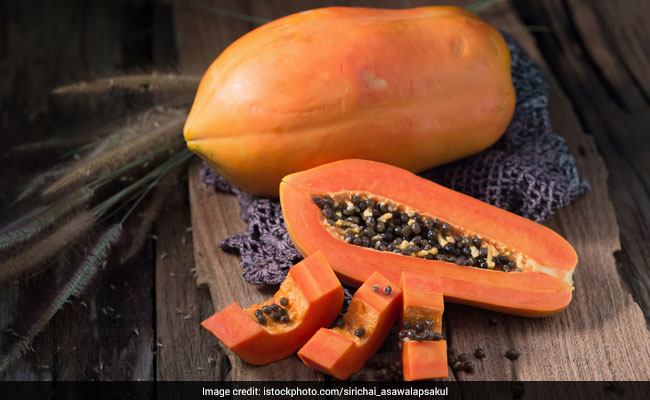
This is a fruit which you come to love once you develop a taste for it. It is not everyone’s favourite, but those who love it find it hard to get by a morning without digging into a bowl of freshly cubed papayas. The orange-coloured flesh is very tempting indeed, but what puts most people off, is the slight bitter aftertaste that accompanies the otherwise sweet fruit. This is the reason why children are often fussy about it and instead go for sinful mangoes, grapes, berries and the like. Have it on its own or team it with a mixed-fruit bowl, it is an energy booster. Believed to be a native of Central America, growing along the Caribbean coast, the tree was considered sacred by the Mayans for its various medicinal properties. The fruits are not the only segment of the tree that was considered valuable, the leaves, seeds, and flowers too possess healing powers. It is also said that the great voyager Christopher Columbus used to refer to it as “fruit of the angels”. What makes papaya such an incredible ingredient is the presence of the enzyme papain along with other essential nutrients that work together to provide you nature’s best.


Benefits of papaya: This is a fruit which you come to love once you develop a taste for it


The Benefits of Papaya


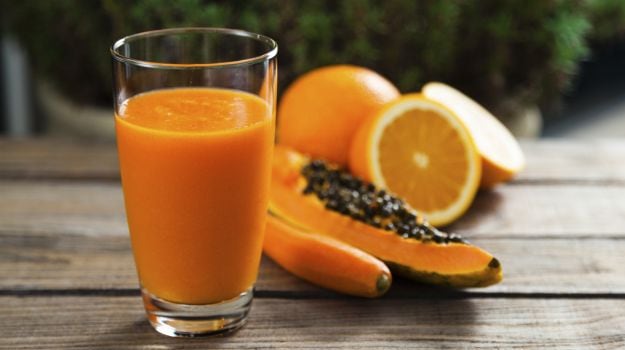
1. Digestion - The enzyme papain present in papaya is known to aid digestion by breaking down proteins. Therefore, a glass of papaya juice is often recommended as a home remedy for digestion-related problems or constipation. Papaya is also high in fibre and water content, both of which help to prevent constipation and promote a smooth bowel movement. 

2. Anti-inflammatory - Apart from papain, papaya also contains other effective enzymes that help against inflammation and promote healing of burns. Papayas have high digestive enzymes; they help in supporting your digestive fire or agni. 


3. Heart Disease and Cancer - Papaya is rich in anti-oxidants and phyto-nutrients that work against free radicals and therefore is said to protect the body from possible heart diseases and cancer. The fibre, potassium and vitamin content help ward off the risk of heart diseases. Including more papaya in your diet can help keep your heart safe. 

heart

Benefits of papaya: Papaya is rich in antioxidants and phyto-nutrients 

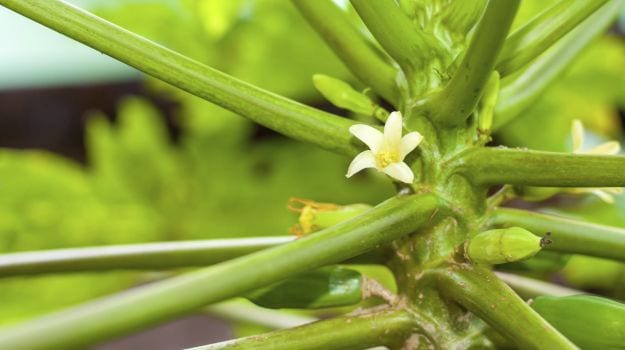
4. Diabetes - Many researchers have found that the consumption of raw papaya could help maintain blood sugar level and cholesterol because of the high fiber content, thereby keeping a check on diabetes. According to a study done by the Centre of Excellence for Biomedical and Biomaterials Research at the Mauritius University, green tea and fermented papaya work together as preventive means for diabetes. In some parts of India, especially the North East, papaya flowers are locally used as a preventive measure against diabetes. The bitter flowers are lightly sautéed in a little oil and consumed as a side to rice on a regular basis.


Benefits of papaya: consumption of raw papaya could help maintain blood sugar level

5. Immunity - Papaya is a great source of vitamin A, B, C, and K and is known as an excellent immunity booster. It is great for the growth of body tissues, including hair and skin. It helps in maintaining collagen, the structural protein of connective tissues. It is said that a medium-sized papaya could provide you double your daily requirement of vitamins.

6. Cleansing - Beauty experts too, often suggest using slices of papaya as a natural skin cleanser as the active enzymes work wonders to remove impurities.

7. Arthritis - It is also rich in minerals such as calcium, potassium, magnesium and copper. Regular consumption helps in building up the calcium bank in the body and in the long run could help keep a check on arthritis.  


Benefits of papaya: Regular consumption helps in building up the calcium

8. Dengue - Papaya leaves are commonly used in the treatment of dengue to help boost up the count of platelets. Dr. Anju Sood, a Bangaluru-based nutritionist says, “Dengue is an infection which affects the blood platelets massively. A simple remedy to get back the platelets count is to give the patient a glass of papaya leaf juice. It is prepared by grinding the leaves with a small amount of water to extract the juice.” However, dengue can prove to be fatal once it develops into Dengue Hemorrhagic Fever which shuts down the circulatory system.

9. Weight Loss - papaya is low in calories and therefore proves to be the perfect option for breakfast. A serving of 140 grams of the fruit contains only 60 calories, with total fat 0.4 gram, no cholesterol, 15.7 gram carbohydrates and 2.5 gram dietary fiber.

Cooking with Papaya

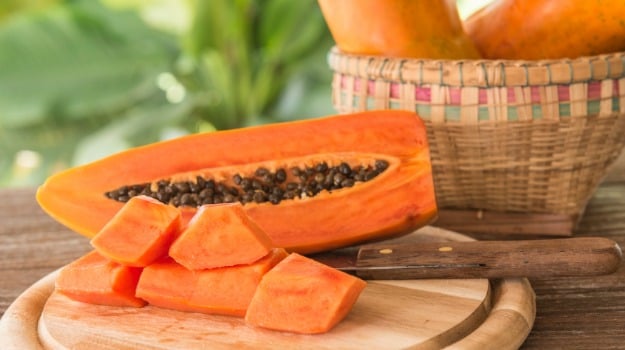
Papayas are commonly available in the markets and used in both forms, raw and ripe, to cook a number of dishes. The Thai classic, raw papaya salad is one of the most popular dishes not just in Southeast Asia but across the globe too. The julienned flesh tossed with lemon juice, chillies, peanuts and fresh herbs provide a delicious medley of flavours, and it makes a great option for a refreshing and light lunch.


Benefits of papaya: Papayas are commonly available in the markets and used in both forms

In India, papaya is used to make halwas, coolers, chutneys, pachadi (south Indian accompaniment), and the likes. Raw papaya is considered to be one of the best agents to tenderise meat and is extensively used in the making of kebabs and meat-based curries such as Bengali Mutton Chaap or Spicy Duck Roast.

The young leaves are often steamed or lightly sautéed and consumed as a green leafy veggie. The flowers too are slightly sautéed and eaten along with rice. The unripe fruit is made into curries and stews along with aromatic spices which lend in a delectable flavour. Let’s not forget the seeds! Packed with nutrients, they have a spicy flavour and are often used as a substitute to black pepper in some cultures.

Here are three simple recipes to help you get started –


Rocky Singh's favourite Thai salad, Som Tam is a green papaya salad that combines all four tastes - sour, chilli, sweet and salty.


Benefits of papaya: Som Tam
Papite ka Halwa

Tender papaya mixed in with elaichi, ghee and walnuts to make a delicious halwa.


Benefits of papaya: Tender papaya mixed in with elaichi, ghee and walnuts to make a delicious halwa
Santula
COMMENT
Santula is a very popular vegetable dish of Odisha. Here, potatoes, raw papaya and brinjals are cooked in milk, chillies and masalas.


Benefits of papaya: Santula is a very popular vegetable dish of Odisha

Don't Forget To Pack These 5 Essentials For Your Next Overnight Trip

Don't Forget To Pack These 5 Essentials For Your Next Overnight Trip

The Swirlster Picks team writes about stuff we think you'll like. Swirlster has affiliate partnerships, so we get a share of the revenue from your purchase.

Don't Forget To Pack These 5 Essentials For Your Next Overnight Trip
You can't miss out on these items for your overnighter
For those making the most of your weekends by planning overnight trips, it can be both, thrilling and confusing. Thrilling because it's a new experience and confusing because it's hard to predict what you need. As an overnight trip is a short duration of time, you shouldn't overpack your backpack, but neither should you skip the main items. Whether it's for a slumber party with your pals or a relaxing staycation, here are 5 essentials you shouldn't miss out on.

1. Toiletry Kit
Even though a single night may not call for a ton of makeup products, make sure you don't forget hygiene and sanitary necessities like your toothbrush, hair products, skin products, sanitary pads and more. Toss them into a single kit for better organization.
Swirlster Says: The Tommy Hilfiger Cosmetic Pouch is large and roomy so all your toiletries can fit in. It is available for Rs 1748 from Rs 2499. Shop here.
9uu6l4io
Pouch from Tommy Hilfiger

2. Power Bank
If you aren't completely sure about your agenda or directions, you'll need to consult your phone frequently. Make sure it doesn't run out of juice at the required moment with a power bank, which is also a regular essential that shouldn't leave your handbag.
Swirlster Says: The Philips Power Bank is available for Rs 999 from Rs 1499. Shop here.
9uinh8d
Power bank from Philips

3. Comfy Flats
Even if you've planned a fancy night out with high heels being a part of your dress code, slip a pair of comfy yet stylish flats into your bag. They won't take too much space and keep you comfy if you aren't sure of the terrain or distance.
Swirlster Says: The Miss CL Rose Gold Flats are available for Rs 700 from Rs 1499. Shop here.
q8b5tbvo
Shoes from Carlton London

4. Eye Mask
If you're a light sleeper who gets disturbed easily, an eye mask can come in handy if you have company on your trip. It'll allow you to sleep without needing to turn down the lights for the rest of the party.
Swirlster Says: The Paper Plane Eye Mask is available for Rs 237 from Rs 399. Shop here.
gs0cf47g
Mask from Paper Planes

5. Layers
Whether you're coming back from a late night or aren't sure of how cold it will be, you can't go wrong with a stylish layer like a simple denim jacket. Plus, you can get much out of it even after your trip.
Swirlster Says: The Vero Moda Women's Jacket is available for Rs 3288 from Rs 4699. Shop here.
alll76co
Jacket from Vero Moda

Keep these in mind to pack smartly for your next overnighter.


Extreme heat causing 75 billion hours of work loss every year in India: Lancet

Extreme heat causing 75 billion hours of work loss every year in India: Lancet

The report, ‘Countdown on health and climate change’, released on Thursday, shows that India lost 75 billion hours of work due to extreme heat in 2017, which roughly equals to 7% of its working population

Rising temperatures are a key risk for occupational health. sPhoto: AFP
New Delhi: Rising global temperatures are impacting the work force and occupational health of people, causing loss of 75 billion hours of work every year in India, states a recent Lancet report.
The report, ‘Countdown on health and climate change’, released on Thursday, shows that India lost 75 billion hours of work due to extreme heat in 2017, which roughly equals to 7% of its working population. Over 80% of these losses were in the agriculture sector, which is the most affected.

“Rising temperatures are a key risk for occupational health, with temperatures regularly breaching physiological limits, making sustained work increasingly difficult or impossible,” highlights the report, which examined three work sectors -- service, industry and outdoor.

While vulnerability to extremes of heat has steadily risen since 1990, India was identified as most affected by these changes, along with South-east Asia, sub-Saharan Africa and South America. In 2015, the hottest year on record, India lost as many as 2,000 lives due to heat waves. This number declined to 1,110 in 2016 and 222 in 2017, even as the frequency of heat waves continued to increase.

“Heat stroke is a medical emergency and can be fatal if not promptly and properly treated. It usually causes nausea, cramps, irritation, disorientation. In extreme cases it can also induce coma. It mainly affects people with low tolerance and immunity levels, specially the elderly, but it can take a toll on the younger population too,” said Rajiv Dang, medical advisor and director of internal medicine, Max Hospital, Gurgaon.

In 2017, an additional 157 million heat wave exposure events occurred globally, which was 18 million higher than in 2016. Adults aged more than 65 years are particularly vulnerable, as are individuals with underlying cardiovascular diseases, diabetes, and chronic respiratory diseases, and those living in urban areas.

Apart from decreasing labour productivity, climate change has also led to increased capacity for the transmission of diseases such as dengue fever, malaria and cholera. According to the report, the global vector capacity for the transmission of the dengue fever virus was the highest on record in 2016, rising to 9.1% for Aedes aegypti and 11.1% for Aedes albopictus above the 1950s baseline.

“When temperature rises, various bacteria, viruses and other microbes get a conducive environment to grow, especially when there is a transition from summer to monsoon, causing diseases like dengue and chikungunya,” said A C Dhariwal, consultant, National Vector Borne Disease Control Programme.

Highlighting that lack in progress in reducing emissions is threatening human lives, the report prepared by 27 leading academic institutions, the UN, and intergovernmental agencies from every continent indicates there is an unacceptably high level of risk to the current and future health of populations across the world.

Source:https://www.livemint.com/Politics/bBrxA1cLScKy6tn1fjTeyN/Extreme-heat-causing-75-billion-hours-of-work-loss-every-yea.html